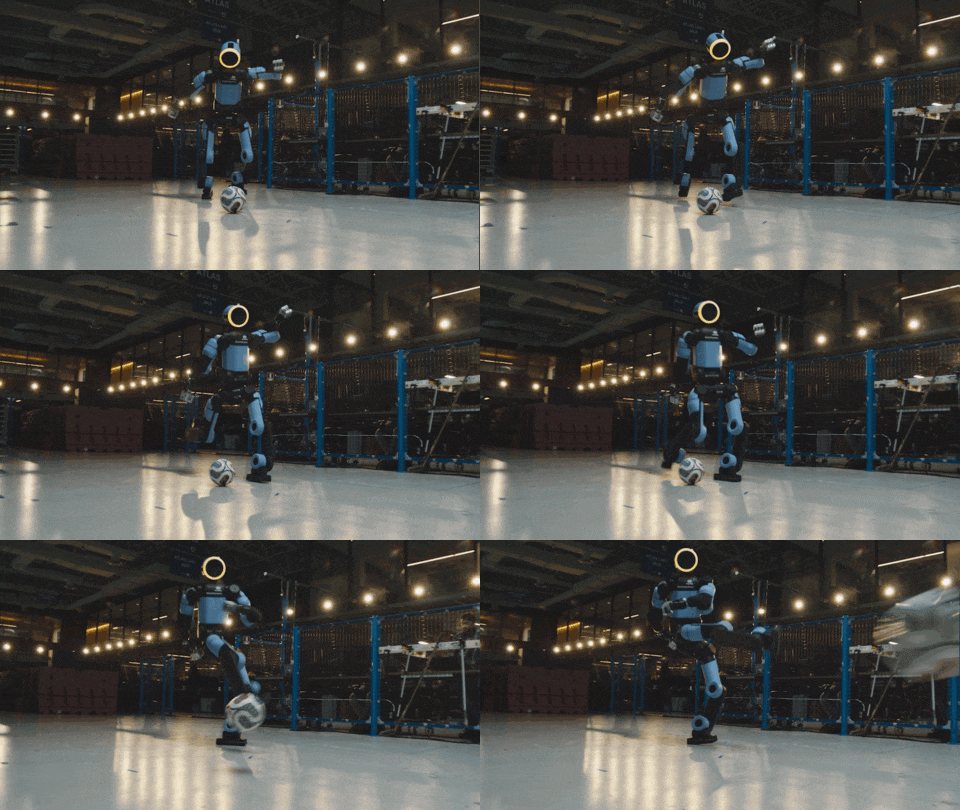
The United States has recently enacted a ban on the importation of foreign-made humanoid robots, with a particular focus on products originating from China. This decision is rooted in national security concerns and reflects ongoing tensions between the two economic giants.
Background
Humanoid robots, designed to resemble and mimic human actions, have been a subject of fascination and development across the globe. These robots are increasingly used in various sectors, from manufacturing and healthcare to customer service and entertainment. However, with technological advancements comes the potential for misuse, particularly in terms of espionage and data security.
For years, the U.S. has expressed concerns about the security implications of technology and devices manufactured in China. The latest move follows a series of measures aimed at curbing Chinese influence in critical technological areas, underscoring the strategic competition between the two nations.
Key Developments
The ban specifically targets humanoid robots that are manufactured in foreign countries, with an emphasis on Chinese products. The U.S. government has cited risks related to data privacy and national security, suggesting that such robots could be used for surveillance or data collection without proper oversight.
In response, Chinese officials have expressed disappointment, arguing that the ban is an unfounded attack on Chinese innovation and technology. They have called for dialogue and cooperation rather than restrictive measures that could hinder technological progress and international trade.
Impact
This ban is likely to have significant implications for various stakeholders. For American companies and consumers, it means a potential reduction in the availability of advanced robotic technologies that have been increasingly integrated into daily operations and lifestyles.
For Chinese manufacturers, the ban represents a substantial setback, limiting their access to one of the world’s largest markets. This could lead to financial losses and a re-evaluation of their strategies for international expansion.
Moreover, the decision may influence other countries’ policies on the importation and regulation of foreign technology, potentially leading to a broader re-examination of trade relationships and security protocols worldwide.
What Next
As the ban takes effect, both the U.S. and China are expected to engage in negotiations and discussions to address the underlying concerns. It remains to be seen whether this ban will lead to a long-term shift in trade policies or prompt a collaborative approach to address security issues in the tech industry.
In the meantime, companies in both countries are likely to explore alternative markets and partnerships, while policymakers and industry leaders work to balance innovation with security.
The outcome of these developments could shape the future of international trade and technological advancement, highlighting the need for careful consideration of security risks in an increasingly connected world.
Frequently Asked Questions
Why has the U.S. banned foreign-made humanoid robots?
The U.S. has banned foreign-made humanoid robots due to national security concerns, particularly focusing on products from China. The government fears these robots could be used for espionage or unauthorized data collection, posing risks to data privacy and national security.
How might this ban affect American consumers and businesses?
American consumers and businesses might experience a reduction in the availability of advanced robotic technologies, which have become integral in various sectors such as manufacturing, healthcare, and customer service. This could potentially slow down technological integration and innovation in these areas.
What is China's response to the U.S. ban on humanoid robots?
China has expressed disappointment over the U.S. ban, viewing it as an unfounded attack on Chinese innovation and technology. Chinese officials are advocating for dialogue and cooperation instead of restrictive measures that could hinder technological progress and international trade.
Could this ban influence other countries' policies on technology imports?
Yes, the U.S. ban on foreign-made humanoid robots could prompt other countries to reconsider their own policies on technology imports. This decision might lead to a broader re-examination of trade relationships and security protocols on a global scale, potentially affecting international trade dynamics.
What sectors are most likely to be impacted by the U.S. ban on humanoid robots?
The sectors most likely to be impacted include manufacturing, healthcare, customer service, and entertainment, where humanoid robots are increasingly used. The ban could disrupt the integration of robotic technologies in these industries, affecting efficiency and innovation.